
| Date | 500s-400s BCE |
| Place of origin | Italy |
| Culture/Period | Etruria |
| Material/Technique | Terracotta |
| Dimensions | 21.9 cm (8 5/8 in.) tall |
| Current location | The Cleveland museum of art, USA |
| Licence | CC0 |
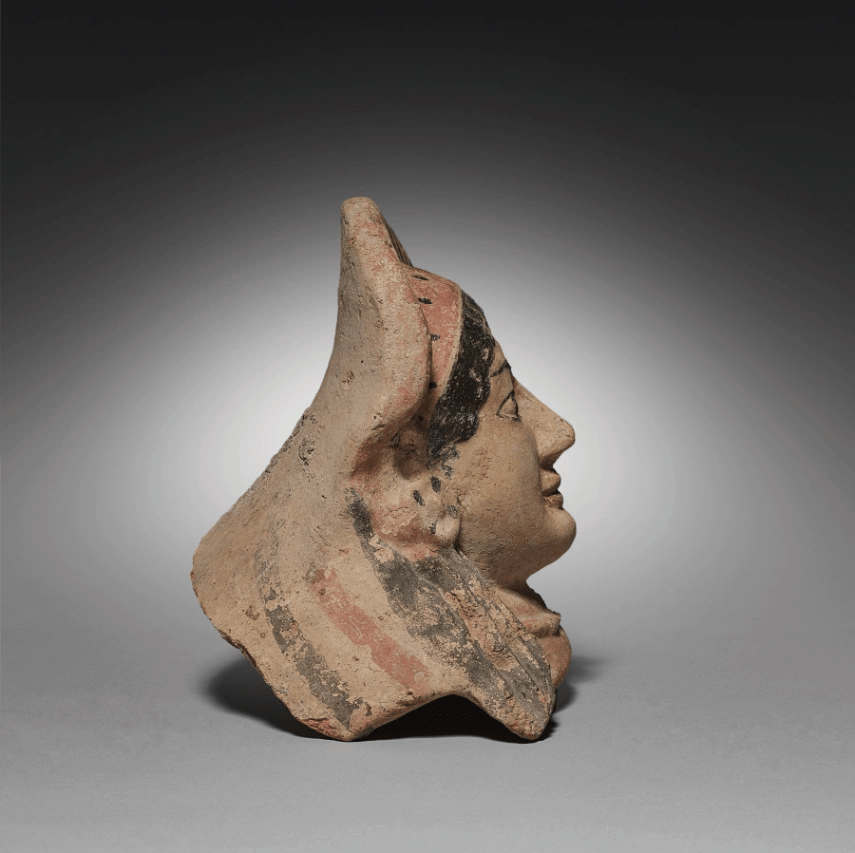
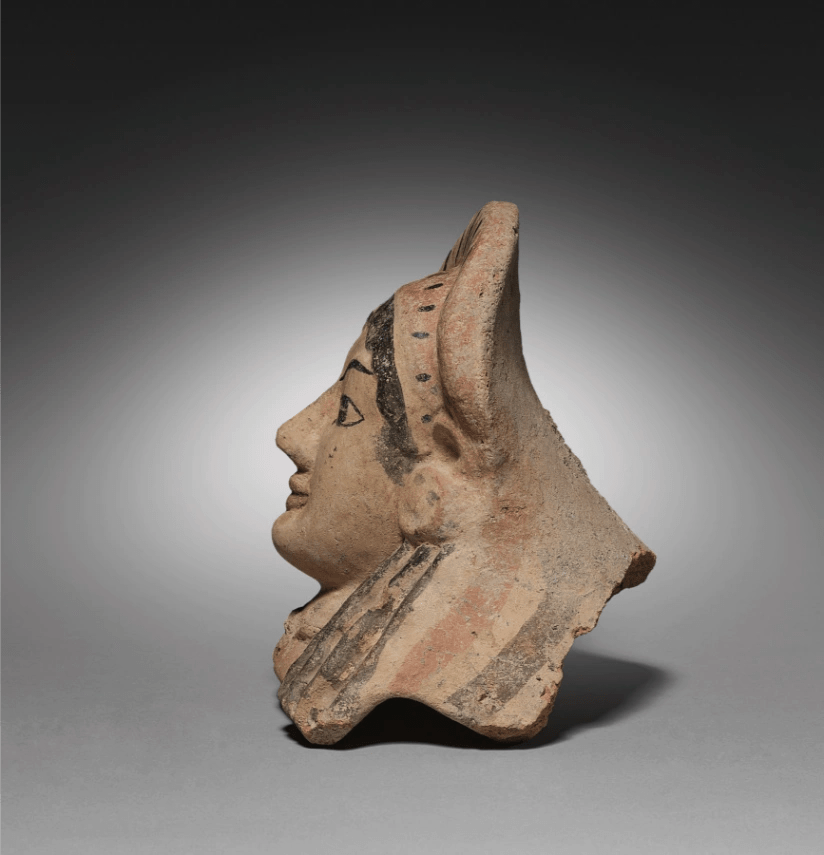
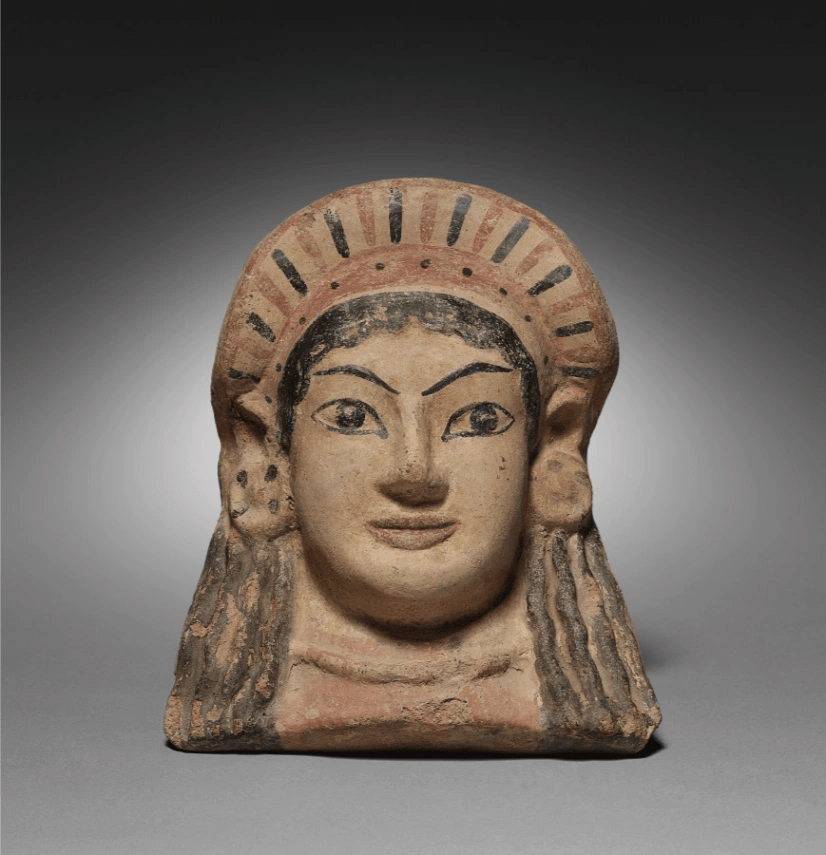
She would once have looked out from the edge of a temple roof, high above an etruscan street or sanctuary, her calm face meeting the sky while rain ran harmlessly away beneath her. At first glance she seems almost gentle, with her almond-shaped eyes and faint, knowing smile, yet she belonged to a powerful architectural world in which beauty, protection, and sacred presence were inseparable. This Etruscan antefix turns a practical building element into something vivid and human, giving the roofline itself a face, a mood, and a touch of divine mystery.
An Architectural Sculpture from Etruria
This antefix was made in Etruria, in central Italy, during the late 6th or early 5th century BCE, at the height of Etruscan artistic and urban development. In that period, cities such as Veii, Tarquinia, and Cerveteri were thriving centers of trade, religion, and monumental building, and terracotta played an especially important role in their architecture. Unlike the Greeks, who often favored stone for sculptural decoration, the Etruscans developed an extraordinary tradition of painted terracotta ornament, using it to animate temples and public structures with color, movement, and expressive figures. This antefix belongs to that world of brilliantly adorned roofs and sacred buildings whose appearance would have been far more vivid than the surviving clay alone now suggests.
A Maiden on the Roofline
As an antefix, the object had a clear practical purpose. It capped the open ends of roof tiles along the sloping edges of a building, helping to protect the wooden roof structure from weather. But in Etruscan hands, such functional elements became opportunities for artistic invention. Instead of a plain architectural cap, we find the face of a woman, poised between ideal beauty and quiet strangeness. Her expression is especially compelling. The slight smile recalls the so-called archaic smile known from Greek sculpture, yet here it feels less formulaic and more elusive, as if it hinted at a presence just beyond ordinary human expression.
Sacred Meaning and Female Presence
The identity of the figure cannot be fixed with certainty, but female heads of this kind may have evoked maenads, nymphs, or other beings associated with divine and mythological worlds. In Etruscan religious culture, female imagery often carried strong symbolic force, and such figures may have been tied to deities like Fufluns, the Etruscan counterpart to Dionysos, whose sphere included wine, ecstasy, fertility, and altered states of being. If so, the contrast between the maiden’s serene face and the wilder energies of the cult world behind it becomes especially interesting. She would have offered not only ornament, but a kind of spiritual presence, turning the temple roof into a protective and expressive boundary between the human world and the realm of the gods.
At the same time, the prominence of female imagery in Etruscan art also reflects the unusually visible place of women in Etruscan society. Whatever this figure’s exact identity, her placement on the building would have made her an active participant in the sacred and visual life of the structure.
Painted Terracotta and Etruscan Craft
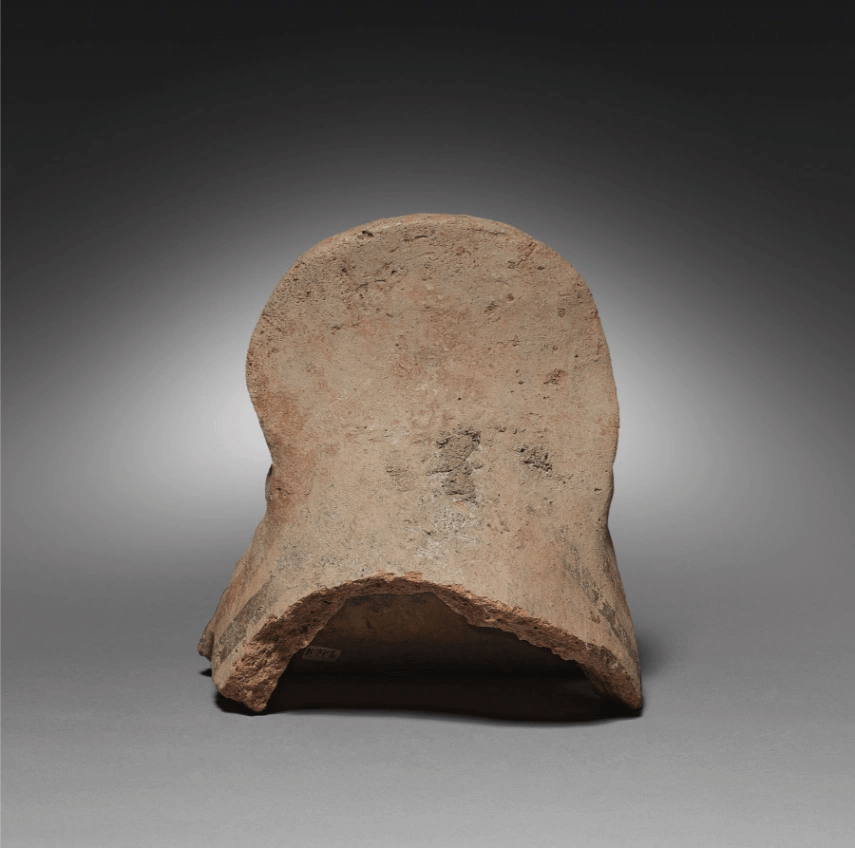
The antefix is made of painted terracotta and measures 21.9 cm in height, or 8 5/8 inches. It was molded with a rounded back so it could fit over the exposed end of a roof tile, combining decorative and protective functions in a single form. The face was carefully modeled, and it would originally have been enlivened by bright polychrome paint, probably including reds, blues, yellows, and other strong tones typical of Etruscan architectural sculpture. Terracotta was especially well suited to this kind of work, since it could be molded, fired, and produced in quantity, while still allowing for striking detail and expressive character. The object’s standardized shape suggests workshop production, but the refinement of the face shows that artistry remained central to the result.
From Ancient Roof to Museum Collection
The antefix’s precise archaeological origin is not known, though it likely came from an Etruscan temple or public building in one of the major cities of ancient Etruria. Many similar works were recovered in excavations at sites such as Veii and Cerveteri, where painted terracotta decoration once transformed entire rooflines into sculptural ensembles. Today it is part of the collection of the Cleveland Museum of Art, where it survives as a vivid reminder of how Etruscan builders gave architecture not just structure, but personality and sacred presence.
-

Etruscan Antefix – Museum Replica
Price range: €94,00 through €531,00


