
| Date | c.1850-1900s CE |
| Place of origin | Korea |
| Culture/Period | Joseon dynasty |
| Material/Technique | Gilded paper, metal wire, and black silk. |
| Dimensions | 24.2 cm in height, 26.7 cm in width, and 17.8 cm in depth (9 1/2 × 10 1/2 × 7 in.) |
| Current location | The Cleveland museum of art, USA |
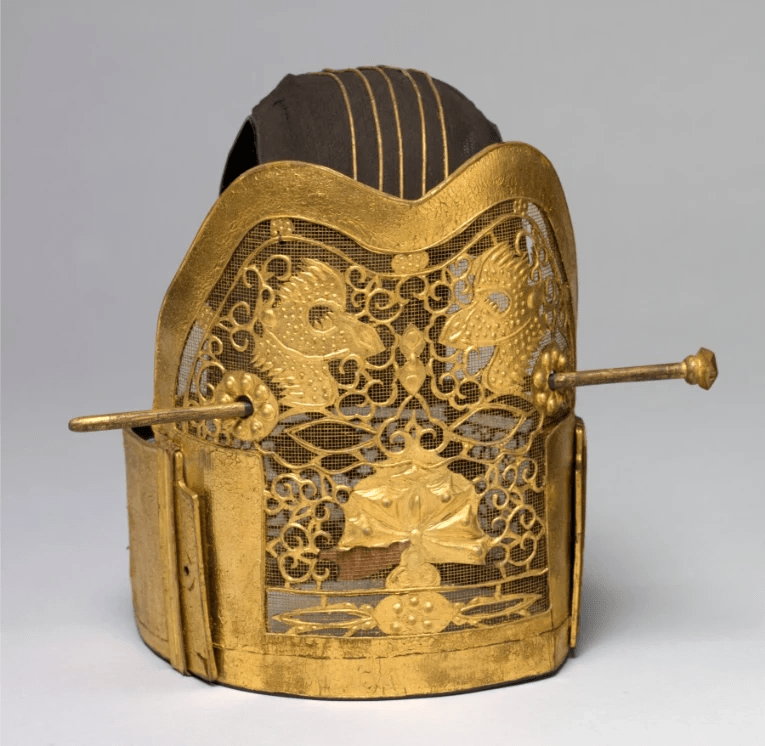
This crown, part of a royal ceremonial costume from the Joseon dynasty (1392–1910 CE) in Korea, is an exquisite example of the court’s rigid ceremonial culture. Made from gilded paper, metal wire, and black silk, it exemplifies the luxurious yet symbolically laden materials used for state rituals. Its craftsmanship and significance offer insight into the values and hierarchical structures of one of Korea’s most influential dynasties.
The crown dates to the late 1800s–early 1900s, during the final decades of the Joseon dynasty. It was a component of the “Myeonbok” attire, an extremely formal ceremonial costume worn by monarchs and high-ranking officials during major state rituals, such as coronations, ancestral rites (Jesa), and diplomatic receptions. The Joseon dynasty, deeply rooted in Confucian values, emphasized strict adherence to ceremonial codes, where every element of dress conveyed specific meanings about status, morality, and cosmic order.
The Myeonbok, along with its crown (often referred to as myeonryugwan), was used during Jongmyo Jerye ceremonies—ancestral rituals held at the Jongmyo shrine in Seoul to honor deceased kings and queens. These ceremonies, still performed today and recognized by UNESCO as Intangible Cultural Heritage, demonstrate the continuing cultural relevance of such regalia. Additionally, crowns like this one were worn at state academies such as Gukjagam or Sungkyunkwan, where Confucius and other sages were venerated, emphasizing the close link between governance, ritual, and education.
The crown was not merely decorative; it functioned as a potent symbol of cosmic authority and moral virtue. Materials like gilded paper and black silk signaled the wearer’s dignity and legitimate power. The construction’s lightness and stability allowed it to be worn comfortably during long ceremonies. Furthermore, the crown’s horizontal rod, a distinctive feature, symbolized cosmic balance and stability, demarcating the sacred role the wearer assumed during rituals. Even the simplest forms carried rich symbolic connotations drawn from both Confucian philosophy and indigenous Korean and Chinese mythologies.
The crown is crafted from gilded paper, metal wire, and black silk. It measures 24.2 cm in height, 26.7 cm in width, and 17.8 cm in depth (9 1/2 × 10 1/2 × 7 in.). The use of gilded paper demonstrates a method of achieving an opulent appearance without excessive weight, while the internal metal structure provides necessary support. The black silk overlay adds a solemn and dignified finish suitable for its ceremonial use.
This crown, along with the full set of ceremonial garments and accessories, is currently held at the Cleveland Museum of Art. It forms part of a collection that highlights the artistic and ritual practices of the Korean court in the late Joseon period. Its presence in the museum today ensures that the meticulous ceremonial traditions of Joseon Korea are accessible for study and appreciation worldwide.


-

Royal crown – Museum replica
Price range: €103,00 through €597,00


