
| Date | 400-375 BCE |
| Place of origin | Unknown |
| Culture/Period | Etruria |
| Material/Technique | Bronze |
| Dimensions | 5,2 x 9 cm (2 x 3 in.) long |
| Current location | The Cleveland museum of art |
| Licence | CC0 |
A reclining lyre player attached to the rim of a vessel turns banqueting itself into decoration. The figure does not simply represent music; it makes music part of the object’s visual identity, as though the basin once carried its own miniature symposium around the edge. That idea is especially revealing in an Etruscan context, where feasting, display, and performance were deeply intertwined, and where luxury objects often echoed the very activities for which they were used.
A Bronze Ornament from Etruscan Banquet Culture
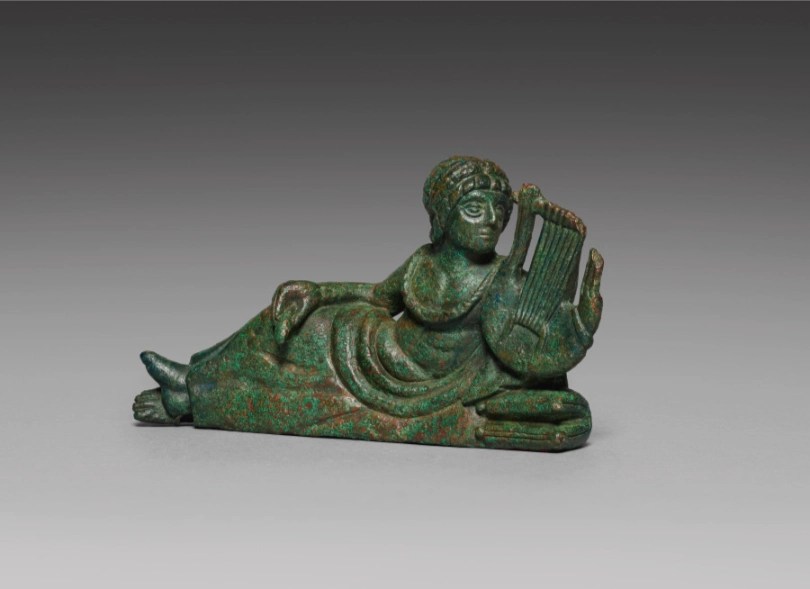
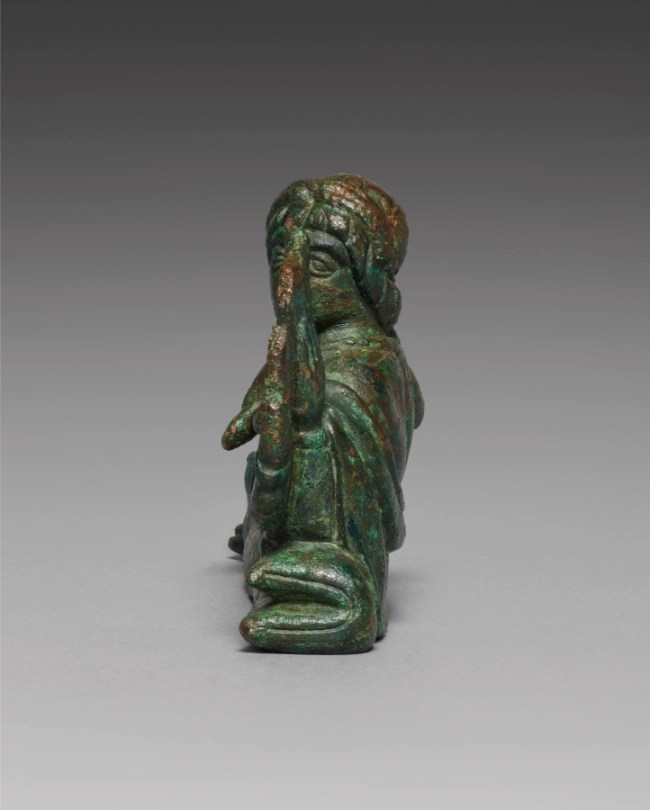
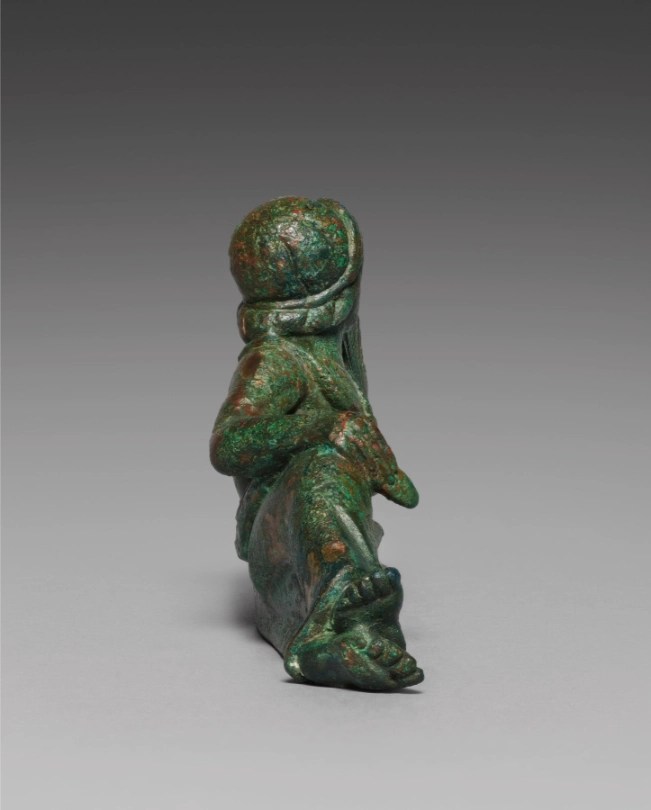
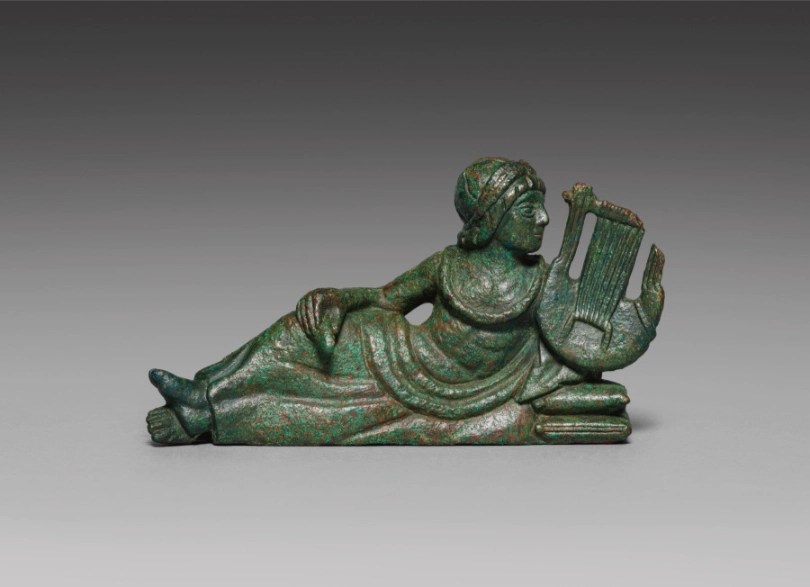
This Vessel Ornament of Reclining Lyre-player was made in Etruria around 400–375 BCE. It originally belonged to a larger bronze basin whose rim was adorned with multiple small reclining figures, creating a continuous visual world of banqueters and entertainers around the vessel. Grooves on the underside show how the figure was attached, confirming that it was never meant to stand alone. The basin itself, now lost, may have served at elite banquets, perhaps for holding or pouring liquid, though such richly decorated vessels could also pass into funerary use, where banquet imagery carried associations of status, pleasure, and continuity into the afterlife.
Music in Miniature
The figurine holds a lyre and an oblong pick, making him one of the clearest musical figures from the ensemble. His pose is especially effective: reclining like an actual banqueter, he collapses the distinction between performer and participant. In an ancient feast, music was not incidental background but part of the event’s structure, accompanying drinking, conversation, ritual, and display. By placing a lyre-player directly on the vessel, the maker turned the basin into something more than fine tableware. It became a small theater of aristocratic life, animated by the same pleasures that surrounded its use.
The Lyre and Cultural Prestige
The lyre was one of the most important instruments of the ancient Mediterranean world, associated with education, refinement, poetry, and divine order. In Greek culture it was closely linked with Apollo, while in Etruria it entered a visual and musical language shaped by constant exchange with the Greek world. Its appearance here therefore signals more than entertainment. It marks the figure as cultivated and ties the object to a broader world of elite identity, one in which familiarity with music and Greek-style banqueting practices carried social prestige. The ornament shows how thoroughly the Etruscans adapted and transformed such influences within their own luxury arts.
Garlands, Drapery, and Refined Detail
One of the most appealing features of this figurine is the delicacy of its modeling. The banqueter’s face inclines toward the lyre, creating a sense of concentration and quiet absorption rather than theatrical display. Garlands on the head and chest reinforce the festive atmosphere and suggest the adornment associated with banquets, ritual occasions, or celebratory processions. The treatment of the himation is equally important. The emergence of the feet from the drapery gives this figure a slightly different character from others in the group, introducing variation into what might otherwise have been a repetitive decorative cycle. That willingness to individualize each figure is typical of high-quality Etruscan bronze work.
Bronze, Gilding, and Luxury Finish
The ornament is made of bronze and measures 5.2 × 9 cm (2 1/16 × 3 in.). Although small, it preserves evidence of rich surface treatment: traces of gilding survive on the lyre, lips, and drapery, and these remnants suggest that the entire figure may once have gleamed much more brightly. Such gilding would have animated the vessel in candlelight or daylight, making the ensemble even more striking in use. Etruscan metalworkers were renowned for their technical skill, and this combination of casting, detailed finishing, and gilded surface belongs to a wider tradition of luxury bronzes made for elite consumption.
Banquets, Memory, and the Afterlife
Objects like this did not only belong to the world of living sociability. In Etruscan culture, banqueting imagery also had strong funerary associations, since the feast could symbolize rank, continuity, and an idealized vision of existence beyond death. A richly adorned basin with reclining musicians and banqueters would therefore have been appropriate both in life and in burial. That dual function helps explain why such imagery was so valued: it joined pleasure, ceremony, and memory in a single artistic language.
Preservation and Significance
The figurine survives in good condition, with expected signs of wear and small damages consistent with age and use. Conservation has focused on preserving both the structural stability of the bronze and the fragile remains of gilding, whose survival is crucial to understanding the object’s original appearance. Even as a fragment, the reclining lyre-player remains a remarkably vivid witness to Etruscan craftsmanship and to the cultural world of music, feasting, and luxury from which it came.

-

Vessel Ornament of Lyre Player – Museum Replica
Price range: €93,00 through €237,00


